What Type of Cells Multiply During Infancy and Again During Adolescence
Physical growth includes attainment of full height and appropriate weight and an increase in size of all organs (except lymphatic tissue, which decreases in size). Growth from birth to adolescence occurs in two singled-out phases:
-
Stage 1 (from nascency to nigh age one to 2 years): This phase is 1 of rapid growth, although the rate of growth decreases over that catamenia.
-
Stage 2 (from well-nigh ii years to the onset of puberty): In this phase, growth occurs in relatively constant almanac increments.
Puberty is the process of concrete maturation from child to adult. Adolescence defines an age group; puberty occurs during boyhood (see Concrete Growth and Sexual Maturation of Adolescents Physical Growth and Sexual Maturation of Adolescents During adolescence (usually considered age 10 to the late teens or early 20s), boys and girls reach adult height and weight and undergo puberty. For boys, see Sexual Differentiation, Adrenarche... read more ). At puberty, a 2nd growth spurt occurs, affecting boys Sexual Differentiation, Adrenarche, and Puberty Male sexual evolution and hormonal function depend on a complex feedback circuit involving the hypothalamus-pituitary-testes modulated by the central nervous system. Male sexual dysfunction... read more and girls Puberty Hormonal interaction between the hypothalamus, anterior pituitary gland, and ovaries regulates the female reproductive system. The hypothalamus secretes a minor peptide, gonadotropin-releasing... read more than slightly differently.
Length is measured in children too young to stand; height is measured once the kid tin can stand. In general, length in normal-term infants increases about thirty% by 5 months and > 50% by 12 months; infants abound nigh 25 cm during the starting time year, and height at 5 years is about double the nascence length. In about boys, half the adult height is attained by near age two; in most girls, summit at nineteen months is about half the adult pinnacle.
Charge per unit of change in height (height velocity) is a more sensitive mensurate of growth than fourth dimension-specific height measures. In general, healthy term infants and children abound about two.5 cm/month between birth and 6 months, 1.iii cm/month from seven to 12 months, and near 7.6 cm/year between 12 months and x years.
Extremities grow faster than the trunk, leading to a gradual alter in relative proportions; the crown-to-pubis/pubis-to-heel ratio is ane.7 at birth, 1.5 at 12 months, 1.ii at 5 years, and one.0 after vii years.
Weight follows a similar pattern. Normal-term neonates generally lose 5 to eight% of birth weight in the days after delivery merely regain their birth weight within two weeks. They then gain 14 to 28 g/day until iii months, then 4000 grand between iii and 12 months, doubling their birth weight by 5 months, tripling information technology by 12 months, and almost quadrupling it past two years. Betwixt age 2 years and puberty, weight increases two kg/year. The recent epidemic of childhood obesity Children Obesity is backlog trunk weight, defined equally a body mass index (BMI) of ≥ 30 kg/mii. Complications include cardiovascular disorders (particularly in people with excess abdominal fat)... read more (see table Changes in Prevalence of Obesity According to NHANES Changes in Prevalence of Obesity According to NHANES  ) has involved markedly greater weight proceeds, even among very young children. In full general, boys are heavier and taller than girls when growth is complete because boys take a longer prepubertal growth period, increased peak velocity during the pubertal growth spurt, and a longer adolescent growth spurt.
Changes in Prevalence of Obesity According to NHANES
| Age Group | 1976–1980 | 2003–2004 | 2007–2008 | 2009–2010 | 2011-2012 | 2013–2014 | 2015–2016 |
|---|---|---|---|---|---|---|---|
| 2–5 years | five% | xiii.ix% | x.1% | 12.1% | eight.4% | 9.iv% | xiii.9% |
| 6–11 years | 6.5% | 18.eight% | nineteen.6% | 18.0% | 17.vii% | 17.four% | 18.4% |
| 12–19 years | 5% | 17.iv% | 18.1% | xviii.4% | twenty.5% | 20.6% | xx.6% |
| 20–74 years | 15% | 32.nine% | 33.vii% | 35.7% | 34.ix% | 37.7% | 39.6% |
| Hales CM, Fryar CD, Carroll MD, et al: Trends in obesity and severe obesity prevalence in United states of america youth and adults by sex and age, 2007-2008 to 2015-2016. JAMA 319 (sixteen):1723–1725, 2018. doi:10.1001/jama.2018.3060 | |||||||
| NHANES = National Health and Nutrition Examination Surveys. | |||||||
Caput circumference reflects encephalon size and is routinely measured upwardly to 36 months. At birth, the encephalon is 25% of adult size, and caput circumference averages 35 cm. Head circumference increases an average one cm/month during the commencement year; growth is more than rapid in the showtime 8 months, and past 12 months, the brain has completed half its postnatal growth and is 75% of adult size. Head circumference increases 3.five cm over the next 2 years; the brain is fourscore% of adult size by age 3 years and ninety% past age 7 years.
Body composition (proportions of body fat and water) changes and affects drug book of distribution Distribution Pharmacokinetics refers to the processes of drug absorption, distribution, metabolism, and elimination. In that location are of import historic period-related variations in pharmacokinetics. Absorption from the gastrointestinal... read more . Proportion of fat increases rapidly from 13% at nascence to 20 to 25% by 12 months, accounting for the chubby appearance of most infants. Subsequently, a tiresome autumn occurs until preadolescence, when body fat returns to almost xiii%. At that place is a slow ascension again until the onset of puberty, when body fatty may once more fall, peculiarly in boys. Subsequently puberty, the percentage generally stays stable in girls, whereas in boys there tends to exist a slight decline.
Body water measured as a per centum of body weight is lxx% at nascency, dropping to 61% at 12 months (most equal to the adult percentage). This change is fundamentally due to a decrease in extracellular fluid from 45% to 28% of body weight. Intracellular fluid stays relatively abiding. After historic period 12 months, there is a ho-hum and variable fall in extracellular fluid to adult levels of virtually 20% and a ascension in intracellular fluid to adult levels of about 40%. The relatively larger amount of torso water, its high turnover rate, and the comparatively high surface losses (due to a proportionately large surface surface area) make infants more susceptible to fluid deprivation than older children and adults.
Molar eruption is variable (run across tabular array Tooth Eruption Times Tooth Eruption Times ), primarily because of genetic factors. On average, normal infants should have vi teeth by 12 months, 12 teeth past eighteen months, 16 teeth by 2 years, and all teeth (twenty) by 2½ years; deciduous teeth are replaced past permanent teeth betwixt the ages of five years and 13 years. Eruption of deciduous teeth is similar in both sexes; permanent teeth tend to announced before in girls. Tooth eruption may be delayed by familial patterns or by atmospheric condition such as rickets Hypophosphatemic Rickets Hypophosphatemic rickets is a disorder characterized past hypophosphatemia, defective intestinal absorption of calcium, and rickets or osteomalacia unresponsive to vitamin D. It is usually hereditary... read more , hypopituitarism Growth Hormone Deficiency in Children Growth hormone deficiency is the well-nigh common pituitary hormone deficiency in children and can be isolated or accompanied by deficiency of other pituitary hormones. Growth hormone deficiency... read more , hypothyroidism Hypothyroidism in Infants and Children Hypothyroidism is thyroid hormone deficiency. Symptoms in infants include poor feeding and growth failure; symptoms in older children and adolescents are like to those of adults simply likewise... read more , or Down's syndrome Down syndrome (Trisomy 21) Down syndrome is an anomaly of chromosome 21 that tin cause intellectual disability, microcephaly, brusque stature, and characteristic facies. Diagnosis is suggested by physical anomalies and... read more 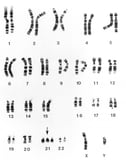 . Supernumerary teeth and congenital absenteeism of teeth are probably normal variants.
Tooth Eruption Times
| Teeth | Number | Historic period at Eruption* |
|---|---|---|
| Deciduous (20 full) | ||
| Lower central incisors | ii | 5–9 months |
| Upper central incisors | ii | eight–12 months |
| Upper lateral incisors | 2 | 10–12 months |
| Lower lateral incisors | two | 12–15 months |
| 1st molars† | 4 | 10–16 months |
| Canines | 4 | xvi–twenty months |
| 2nd molars† | 4 | xx–30 months |
| Permanent (32 full) | ||
| 1st molars† | 4 | v–7 years |
| Incisors | 8 | 6–viii years |
| Bicuspids | 8 | 9–12 years |
| Canines | 4 | 10–13 years |
| second molars† | iv | 11–13 years |
| 3rd molars† | four | 17–25 years |
| * Varies profoundly. | ||
| † Molars are numbered from the front to the back of the mouth (see effigy Identifying the teeth Identifying the teeth | ||

Identifying the teeth
The numbering system shown is the one most commonly used in the US.
The post-obit are some English-language resource that may be useful. Delight note that THE Manual is not responsible for the content of these resources.
Source: https://www.msdmanuals.com/professional/pediatrics/growth-and-development/physical-growth-of-infants-and-children
0 Response to "What Type of Cells Multiply During Infancy and Again During Adolescence"
Postar um comentário